Domestic Abuse Solicitors
If you are experiencing domestic abuse, it can be hard to know what to do next or whether you can afford legal help. National Legal Service solicitors provide confidential advice, assess whether legal aid may be available and can help you apply for urgent court protection where needed.
Call 020 4654 8174 or complete our contact form to request a confidential callback. If you’re in immediate danger, call 999.

How our domestic abuse solicitors can help
Domestic abuse can affect where you live, your safety, your finances and arrangements for your children. A domestic abuse solicitor can explain the legal protections that may be available and help you understand what the court process could involve.
National Legal Service Solicitors can advise on urgent applications, protective orders and family law matters connected to domestic abuse. This may include preparing court documents, explaining what information the court may consider and representing you if court proceedings have started.
We can help with:
- Non-molestation order applications
- Occupation order applications
- Urgent or without-notice applications where appropriate
- Legal aid assessments
- Court representation
- Child arrangements where domestic abuse is a concern
- Domestic abuse concerns involving coercive control or financial control
- Advice where children’s services are involved
- Related family law issues following separation
Every situation is different. A solicitor can help you understand which legal options may be appropriate and what practical steps are available.
Speak to NLS in confidence today
Call 020 4654 8174 or complete our contact form to request a confidential callback. You do not need to travel to London. NLS has offices across England and can explain the legal options available to you.

Legal aid for domestic abuse - do you qualify?

Legal aid may be available if you have experienced domestic abuse and need advice or representation for a protective order. Eligibility is assessed on the type of case, the merits of the application and your financial circumstances.
For protective order applications, the financial rules are more flexible than many people expect. The Legal Aid Agency waives all upper eligibility limits for applications for orders protecting from domestic abuse or forced marriage.
This means that an income or capital level above the usual limits doesn’t automatically prevent you from receiving legal aid for the protective injunction proceedings, although you may be asked to pay a contribution.
You will usually need evidence that you or your child have experienced domestic abuse before legal aid can be confirmed but do not need to have this evidence before speaking to a solicitor.
The domestic abuse waiver applies to the protective injunction proceedings. It does not automatically extend to any separate family law application, such as child arrangements proceedings, where different legal aid rules and evidence requirements may apply.
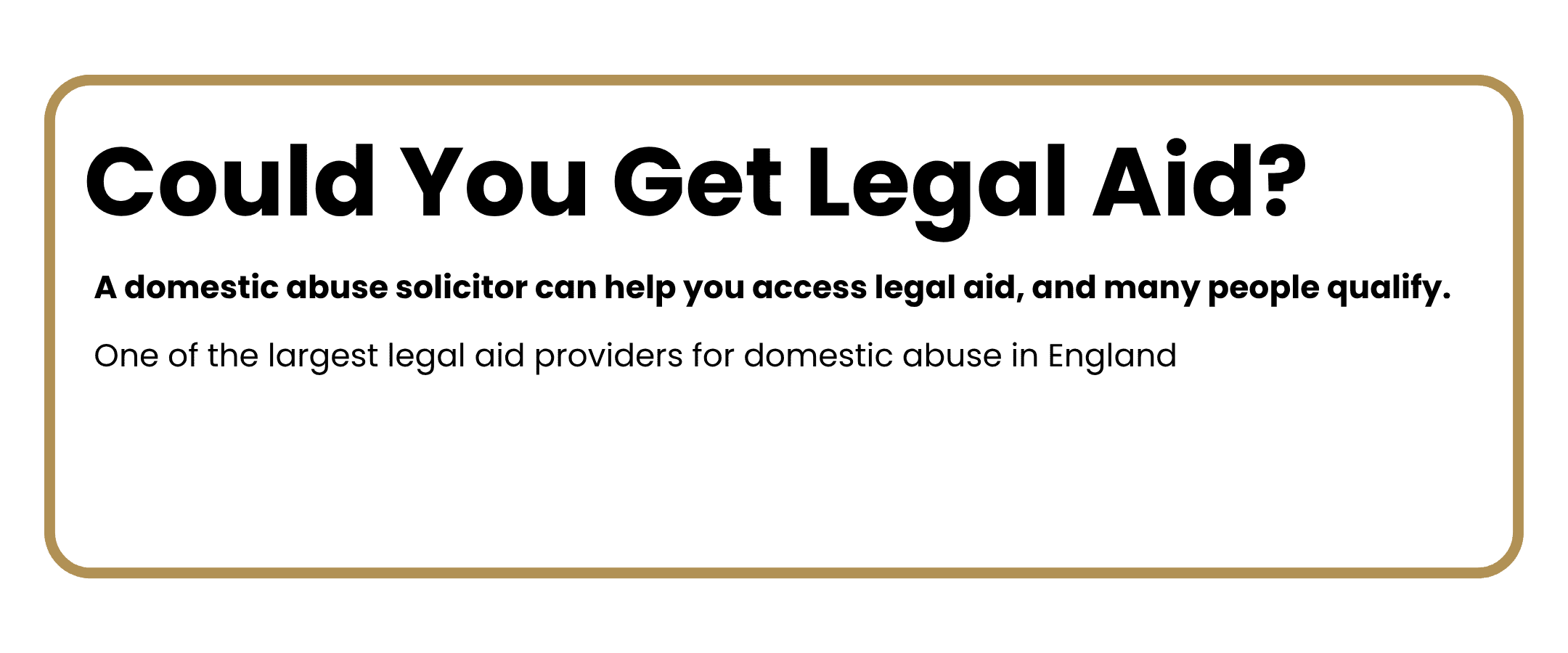
If you are unsure whether you have the right evidence, a solicitor can explain what may be accepted and how the application process works. You should not try to collect evidence if doing so may put you or someone else at risk. As one of the largest legal aid providers for domestic abuse in England, NLS can help you understand the options available.
Emergency legal protection - injunctions and orders
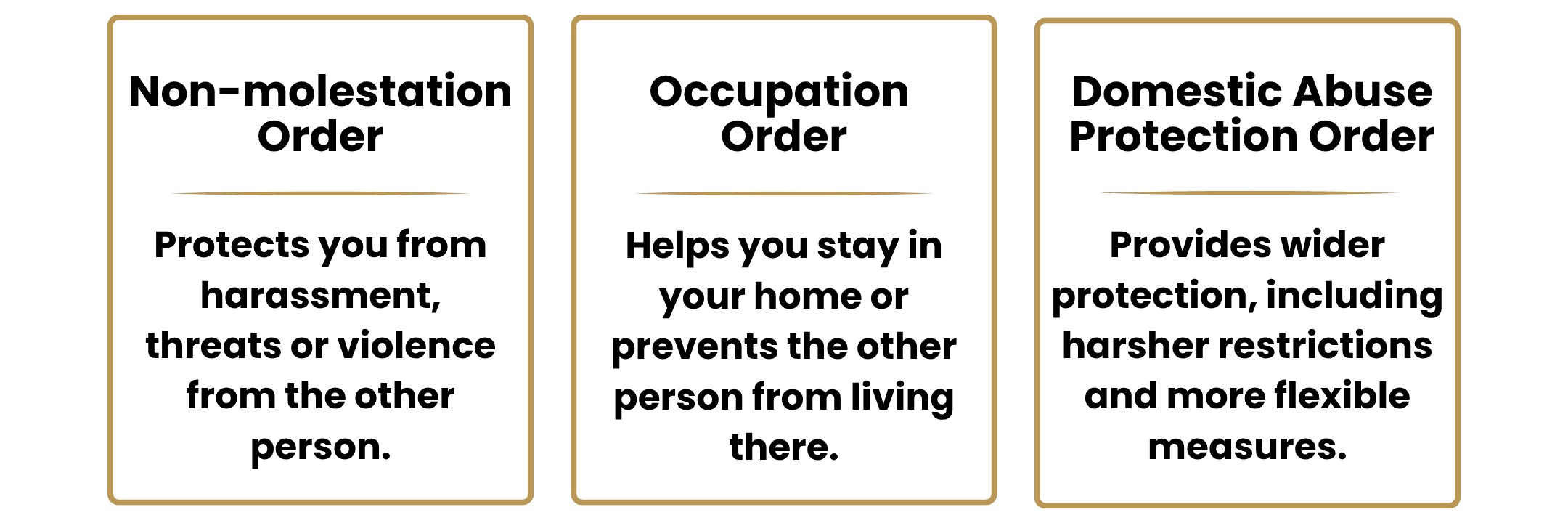
Legal protection may be available if you or your child need protection from abuse, threats, harassment or intimidation. A domestic abuse injunction may include a non-molestation order to protect someone from harm or threats and an occupation order to decide who can live in the family home or enter the surrounding area.
In urgent cases, you may be able to ask the court for an emergency order. If immediate protection is needed, an application can be made without telling the person you need protection from first. This is known as a without notice or ex-parte application and the court may issue an order at the hearing.
Non-molestation orders
Non-molestation orders can place legal restrictions on a person’s behaviour. They may prevent contact, harassment, threats, intimidation or other abusive behaviour depending on the terms of the order.
This type of order may be relevant where the person applying needs protection for themselves or a child. It does not guarantee safety, so it remains important to consider practical safety steps and seek urgent police help if there is immediate danger.
A solicitor can help you understand whether you may be eligible to apply, prepare the application and supporting statement, request urgent protection where appropriate and arrange for court documents to be served safely.
Occupation orders
An occupation order deals with who can live in the family home or enter the surrounding area. This type of order may be relevant where living arrangements have become unsafe or where one person needs the court to consider whether the other person should leave or stay away from the home.
Occupation orders can be complex because the court may consider housing, children, financial resources, safety and the circumstances of the relationship. A solicitor can explain whether this type of application may be appropriate and how it may interact with a non-molestation order.
Domestic Abuse Protection Orders (DAPOs)
Domestic Abuse Protection Orders, often called DAPOs, are designed to provide protection from domestic abuse and the risk of further abuse. They can include restrictions or requirements that the court considers necessary.
DAPOs are currently available only in selected pilot areas. Whether this route is available depends on where the person alleged to have caused the abuse lives, rather than where you live. If a DAPO isn’t available, another protective order A solicitor can explain whether a DAPO may be available in your case and discuss other legal protections where it is not.
What counts as domestic abuse?
Domestic abuse includes more than physical harm. The Domestic Abuse Act 2021 introduced a statutory definition of domestic abuse and covers behaviour between people aged 16 or over who are personally connected, where the behaviour is abusive.
The Act recognises that abusive behaviour can include physical or sexual abuse, violent or threatening behaviour, controlling or coercive behaviour, economic abuse and psychological, emotional or other abuse.
Domestic abuse may include:
- Physical harm or threats of harm
- Emotional or psychological abuse
- Controlling behaviour
- Coercive behaviour
- Economic abuse or financial control
- Intimidation, harassment or isolation
- Abuse involving technology or online contact
- Behaviour directed at another person, such as a child or family member
Though people still search for domestic violence solicitors, NLS follows the governmental use of domestic abuse because abuse can include more than just physical violence. The correct wording matters because many people experience abuse through control, intimidation, isolation, financial restrictions or emotional manipulation without being physical.

Coercive control and emotional abuse

Coercive control is a pattern of behaviour that may make someone feel dependent, isolated or controlled. It can involve monitoring, threats, humiliation, financial restriction, limiting contact with family or friends or controlling everyday decisions.
Coercive or controlling behaviour is also a criminal offence under section 76 of the Serious Crime Act 2015. Statutory guidance from the government describes controlling or coercive behaviour as a serious criminal offence with a maximum penalty of five years’ imprisonment, an unlimited fine or both.
A coercive control solicitor can help you understand:
- Whether the behaviour may be relevant to a protective order
- How to explain a pattern of behaviour to the court
- Whether legal aid may be available
- How coercive control may affect child arrangements
- What to do if the other person uses proceedings to continue control or pressure
It can be difficult to describe coercive control because the behaviour may have built up over time. A solicitor can help you set out the pattern clearly and safely without asking you to take steps that may increase risk.
Will children’s services get involved?
Children’s services (previously known as social services) may become involved if there are concerns about a child’s safety or welfare. This doesn’t mean that court proceedings will automatically start, but it is important to understand what stage the process is at and what information is being requested.
Domestic abuse can affect children even if they are not directly harmed. Practice Direction 12J recognises that children may suffer harm from living with and being victims of domestic abuse and may also be affected where abuse impairs a parent’s capacity to care for them.
A solicitor can clarify:
- What children’s services are asking you to do
- Whether there is a child in need or child protection process
- How domestic abuse concerns may affect the assessment
- How to respond to meetings, reports or safety plans
- Whether legal aid may be available
- How protective orders and child arrangements may interact
If children’s services contact you, try to keep copies of letters, reports and meeting notes where safe to do so. Legal advice can help you respond clearly and understand the possible next steps.
How NLS can help
NLS supports people with family law, care proceedings, domestic abuse, child arrangements, legal aid and children’s services involvement. The NLS service scope includes domestic abuse advice, non-molestation orders, occupation orders, child arrangements where abuse is a concern and legal aid where available. Our advice is confidential and focused on helping you understand the legal process. A solicitor can explain your options, prepare the necessary paperwork and represent you where court proceedings are needed.
NLS can help with:
- Urgent domestic abuse injunction advice
- Non-molestation order applications
- Occupation order applications
- Legal aid assessments
- Court representation
- Child arrangements where domestic abuse is raised
- Advice where children’s services are involved
- Related family law issues arising from separation
You do not need to travel to London to speak to NLS. The firm has offices across England and can discuss the most appropriate way to advise you.

Talk to a domestic abuse solicitor in confidence
If you need advice about domestic abuse, legal aid, an injunction or child arrangements, call 020 4654 8174 or complete our contact form to request a confidential callback. When you contact National Legal Service Solicitors, we will listen to your concerns, ask some initial questions about what support you need and explain the next steps, including whether legal aid may be available.
If you contact us outside office hours, you can use the contact form to request a callback. If you need immediate help or believe you or someone else is in danger, call 999 and ask for the police. If you cannot speak on a mobile, call 999 and press 55 when prompted.
Frequently asked questions
- What does a domestic abuse solicitor do?
A domestic abuse solicitor explains the legal protections that may be available and helps you understand the court process. This may include advice about non-molestation orders, occupation orders, legal aid, court hearings and child arrangements.
A solicitor can also help you prepare your application, organise evidence safely and represent you at court where needed. The right steps will depend on the facts of your case and the level of urgency.
- Can I get legal aid for a domestic abuse case?
You may be able to get legal aid if you have evidence that you or your children have experienced domestic abuse and you cannot afford legal costs. Legal aid eligibility depends on the type of case, the evidence available and the financial rules that apply.
For applications for orders protecting from domestic abuse or forced marriage, the Legal Aid Agency waives all upper eligibility limits. A contribution may still be required, so it is important to have an assessment rather than assume you will or will not qualify.
- What is a non-molestation order?
A non-molestation order is a type of injunction that can help protect you or your child from harm, threats, harassment or abuse. The order sets legal restrictions on the person named in it and they can be arrested if they break it.
The terms of the order depend on the circumstances and what the court considers appropriate. A solicitor can explain whether this application may be suitable and how the process works. Learn more on our dedicated non-molestation page.
- How quickly can I get an emergency injunction?
If immediate protection is needed, you can ask for an emergency order when applying. You do not have to tell the person you need protection from before applying in this situation and the court may issue an order at the hearing.
The timing depends on the court, the urgency and the information provided. If there is immediate danger, contact the police first.
- What is an occupation order?
An occupation order is an injunction that can decide who lives in the family home or who can enter the surrounding area.
This type of order can be particularly important where remaining in the same home is unsafe or unworkable. The court may consider several factors, including housing, safety, children and the circumstances of the relationship.