
A fact-finding hearing is a court hearing in which a judge determines disputed factual issues and decides whether particular allegations are proved. In care proceedings, the court may hold a fact-finding hearing where the disputed facts are relevant to the decisions it needs to make and determining them is necessary and proportionate. The purpose is to establish the facts that may affect whether the legal threshold for significant harm is met and what order, if any, should follow. It’s important to note that this is not about deciding the final outcome of the proceedings. If you are at the beginning of care proceedings, you may find it helpful to first understand what happens at the first hearing in care proceedings and how the court manages the case before a fact-finding hearing takes place.
What a fact-finding hearing is and why courts order them
A fact‑finding hearing is held when serious allegations are disputed, and the court cannot safely move forward without deciding what has actually happened. In care proceedings, this often arises where the local authority alleges that a child has suffered harm or is at risk due to specific incidents, patterns of behaviour or domestic abuse and those allegations are denied by one or more parties. Before the court can decide what long‑term arrangements are in a child’s welfare interests, it must first establish a reliable factual foundation.
The court will usually order a fact-finding hearing where there are significant disputes about the facts. If the parties give conflicting accounts and the court cannot fairly assess the child’s welfare without resolving those differences, a separate hearing may be listed to determine the disputed facts. However, most cases do not require a fact-finding hearing. When there is to be a fact-finding hearing, the Court must decide whether to hold this hearing separately to the final hearing (and most likely before any expert assessment takes place), or whether it can be held alongside any final hearing. In this case, experts are often instructed on an ‘either/or’ basis, which means that the allegation is not yet proved to be true and so the expert must provide an opinion on both sets of possible factual outcomes. Where key events are agreed or supported by uncontested evidence, the court may move directly to considering the child’s welfare without needing to spend court time to decide the facts.
The purpose of the hearing is therefore not to determine where the child will live or whether a care order should be made. Instead, it allows the judge to hear evidence, assess the evidence as a whole and decide which disputed allegations are proved on the balance of probabilities. The court does not necessarily need to determine every disputed allegation before deciding the child’s welfare. The question is whether the findings sought are necessary to enable the court to make the decisions required in the proceedings. Where findings are necessary, the court can use them to assess risk and determine what outcome is necessary and proportionate.
Although fact‑finding hearings are more common in public law cases such as care proceedings, they can also arise in private law disputes about child arrangements where allegations of harm or domestic abuse are raised. In both contexts, the court may need to resolve disputed facts where those facts are relevant to the welfare decisions it has to make.
The process: what actually happens
A fact-finding hearing is a focused hearing within the wider proceedings. It concentrates on the disputed allegations and the evidence relevant to them. It focuses solely on disputed allegations and doesn’t determine long‑term child arrangements at this stage. Here the judge hears and tests the evidence so that a clear factual foundation can be established before any welfare decisions are made.
Who will be at the hearing
At the outset it is helpful to understand who will be present in court. The hearing is attended by the judge, the local authority’s legal team, the children’s guardian and their solicitor and the parents with their legal representatives. In some cases intervenors may also be involved, for example where allegations are made against a third party. Witnesses such as social workers, police officers or medical professionals could also attend if their evidence is relevant to the disputed issues.
How the evidence is prepared and presented
Before the hearing takes place, each party will have filed written statements setting out their account of events. These statements form the foundation of the case and identify precisely which allegations are admitted and which are disputed. The court will also consider supporting documents such as medical reports, police disclosure, school records or expert assessments where relevant.
Where oral evidence is directed, witnesses may be required to give evidence and answer questions about their statements and the other evidence before the court. The judge considers not only the content of the evidence but also its consistency with other material before the court.
How witnesses are questioned
Once a witness has confirmed their statement, they may be questioned by the other parties’ representatives in a process known as cross‑examination. This stage allows each side to test the reliability and accuracy of the evidence. Questions are directed through legal representatives rather than between the parties themselves, ensuring that the process remains structured and fair.
The judge may also ask questions to clarify particular points. Throughout, the court’s focus remains on establishing what is more likely than not to have happened.
What evidence is considered?
Evidence at a fact‑finding hearing may include:
- Witness statements from parents and social workers
- Medical evidence and expert reports
- Police disclosure
- School or healthcare records
- Text messages or other communications
Parents and professionals may be required to give oral evidence and answer questions under cross‑examination. The judge assesses credibility, reliability and consistency when reaching conclusions.
The process can feel formal and intense. Having legal representation ensures that evidence is properly presented and that disputed points are challenged appropriately.
Special measures in domestic abuse cases
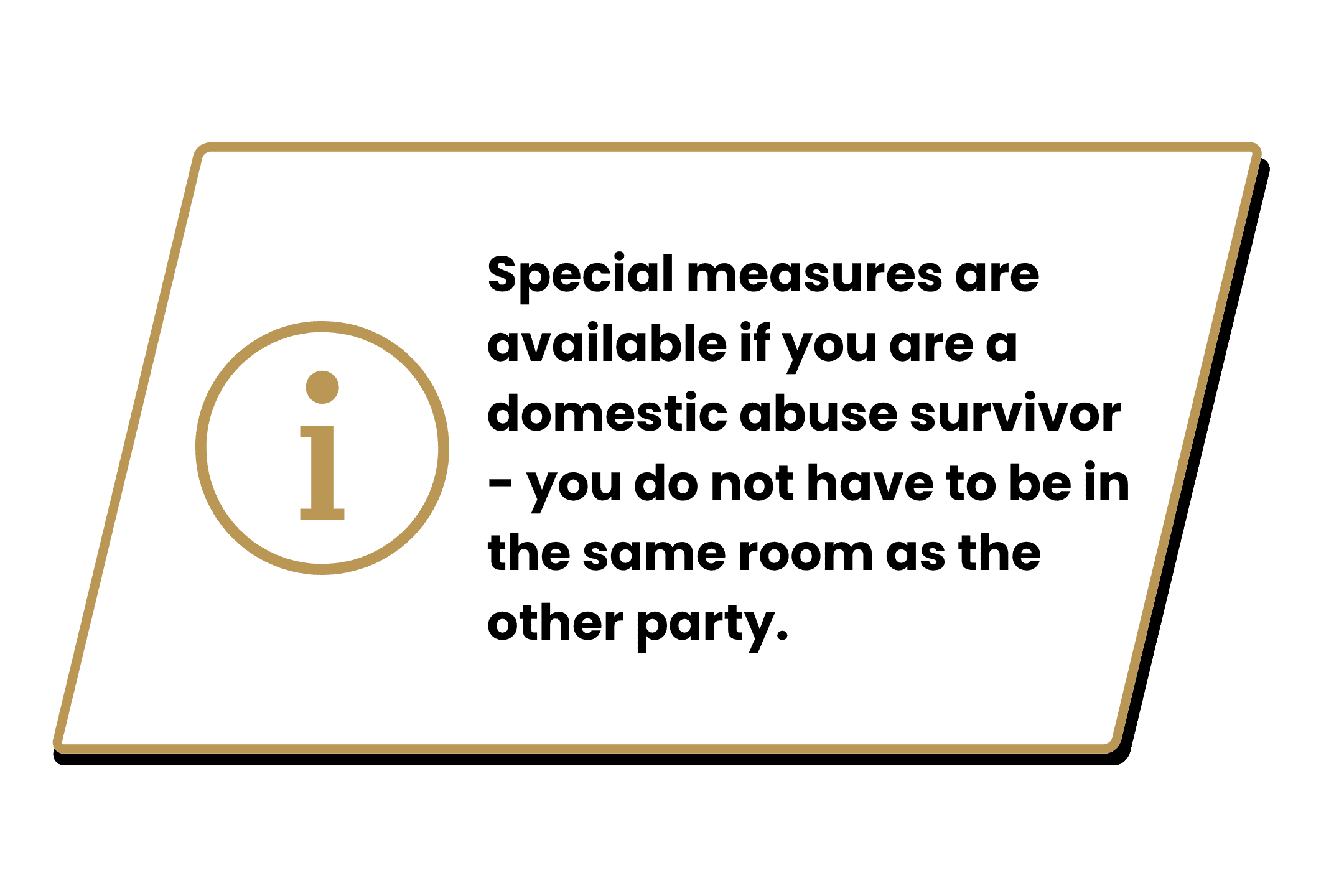
Where allegations of domestic abuse are involved, the court will consider whether special measures are needed to ensure that everyone can participate safely and fairly.
In certain circumstances, a party may be prohibited from personally cross-examining another party or witness. Where this applies, the court will consider alternative arrangements, which may include appointing a qualified legal representative to conduct the cross-examination on their behalf.
Other measures may also be available, such as giving evidence by video link or from behind a screen. The court will consider the circumstances of the case and the measures needed to ensure that the hearing is fair and that evidence can be given effectively.
Timescale and what happens next
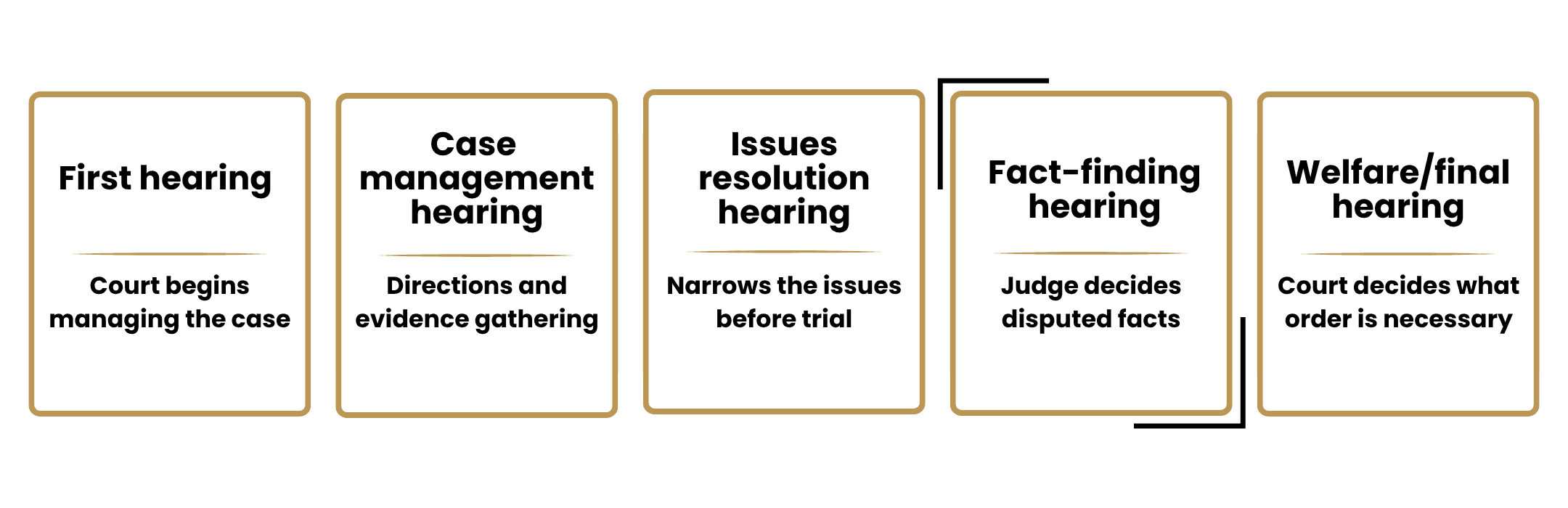
Fact‑finding hearings are usually listed after the initial case management stage and before the final welfare hearing. The length of the hearing depends on the number and complexity of allegations and the witnesses involved. Some may conclude within a day while others extend over several days.
After hearing the evidence, the judge will deliver a judgment, either orally at the end of the hearing or in writing at a later date. The findings made then shape the next stage of the proceedings, where the court considers what orders, if any, are necessary in light of the established facts.
Understanding this sequence can help reduce uncertainty about what to expect. A solicitor can prepare you for each stage, explain the issues in dispute and ensure that your position is clearly presented throughout the hearing.
What the court decides at a fact‑finding hearing
At a fact‑finding hearing, the court’s role is to decide whether the specific allegations in dispute are proved on the balance of probabilities. The judge is not deciding at this stage where the child will live or whether a care order should ultimately be made. Instead, the court determines what did or did not happen so that any later welfare decision is based on established facts rather than competing accounts.
In care proceedings, the judge must consider whether the findings made are capable of satisfying the threshold criteria under section 31 of the Children Act 1989. This means deciding whether the child has suffered or is likely to suffer significant harm and whether that harm is attributable to the care given or likely to be given by the parents not being what it would be reasonable to expect. If the allegations are proved and amount to significant harm or risk of harm, the threshold may be met. If they are not proved, the local authority may not be able to rely on those allegations to justify a final care order.
When the court decides that an allegation is proved, this is referred to as making a finding. A finding is a formal determination that a particular incident occurred or that certain behaviour took place. Those findings form the factual foundation of the case moving forward. The court’s later assessment of risk, protective measures and long‑term arrangements will be based on the facts as determined at this stage.
If findings of harm or ongoing risk are made, the case proceeds to the welfare stage where the court considers what order, if any, is necessary to safeguard the child. This may involve further assessments, revisions to the care plan or consideration of alternatives such as a supervision order. If the allegations are not proved, the direction of the case may change significantly. The local authority may need to reconsider its position and, in some cases, the proceedings may conclude without a final care order being made. Understanding this distinction can help place the fact‑finding hearing in context. It is a crucial stage in the process, but it is not itself the final decision about your child’s future.
How findings affect the rest of your case
The findings made at a fact‑finding hearing set the framework for what happens next. Once the court has decided which allegations are proved, those findings form the factual basis for all later decisions.
In care proceedings, findings of significant harm or ongoing risk will influence the local authority’s care plan and whether it continues to seek a care order. The court will then decide what order, if any, is necessary in light of those established facts. If key allegations aren’t proved, the local authority may need to reconsider its position and the direction of the case can change.
In private law cases about child arrangements, findings of domestic abuse or harmful behaviour will affect how the court assesses risk and structures future arrangements. If allegations are not proved, they will not be treated as established risks when decisions are made.
For this reason, the fact‑finding stage often shapes the outcome of the case even though it is not itself the final welfare decision.
Preparing for a fact‑finding hearing
Because the judge’s findings can impact the rest of the case, careful preparation with your solicitor is important; preparation should start well before the fact-finding hearing even begins.
Your solicitor will review the local authority’s allegations in detail and identify precisely what is disputed. They will help you prepare a clear written statement setting out your account of events and ensure that any relevant documents, messages or records are disclosed. If expert evidence is involved, your solicitor will consider whether questions should be put to the expert or whether further clarification is required. Early instruction is always strongly advised to allow time to gather evidence properly and address weaknesses before positions become fixed.
If the case involves allegations of domestic abuse or other sensitive issues, your solicitor can also raise concerns about how evidence will be given and whether special measures should be requested to ensure fairness and safety at the hearing.
There are practical steps you can take to support your case. These include:
- Reading your statement carefully and checking that it is accurate and complete
- Providing any documents, photographs or messages that support your account
- Informing your solicitor promptly about anything that may be raised in evidence
- Attending all meetings and court appointments
- Engaging with recommended services so that the wider context of the case is clear
If you’re required to give oral evidence, your solicitor will explain what to expect and how cross‑examination works. The aim is to ensure you understand the process and feel prepared.
Legal aid for fact‑finding hearings
Parents involved in care proceedings are entitled to non-means-tested legal aid. Your eligibility does not depend on your income or savings.
Fact‑finding hearings often involve complex legal argument and detailed cross‑examination. Legal representation ensures that your account is properly presented and that evidence is tested fairly.
If you are facing a fact‑finding hearing or have been notified that one is being listed, you can speak to National Legal Service in confidence about your situation. Our care proceedings team can explain the process and represent you throughout the hearing.
Information is for general guidance in England and Wales and is not a substitute for legal advice.