
Many parents do have their children returned to their care at the conclusion of care proceedings. Whether that happens depends on the evidence before the court and whether it is satisfied that the concerns which led to the care proceedings have been addressed.
The court’s role is not to judge or punish parents for past mistakes. Its responsibility is to decide what arrangements are in the child’s best interests, with the child’s welfare being its paramount consideration. The judge will consider whether the child can be cared for safely, both now and in the future, and what changes have been made to reduce any identified risks.
The short answer
Yes, it is possible to get your child back after care proceedings. Every case is decided on its own facts. The court will consider whether the concerns that led to the proceedings have been resolved and whether returning your child to your care is consistent with their welfare and long-term safety. Many families are successfully reunited where there is clear evidence of lasting change.
What the court is actually looking at
Before the court can make a care order, it must decide whether the threshold criteria under the Children Act 1989 are met. In simple terms, this means deciding whether your child has suffered, or is likely to suffer, significant harm because of the care they have received, or because the care that would otherwise be available is not what it would be reasonable to expect from a parent.
If the threshold is met, the court must consider whether any orders are necessary and also decide what outcome is in your child’s best interests. To do that, it applies what is known as the welfare checklist. In practice, the judge will consider factors including:
- The child’s views
The court will take into account the child’s wishes and feelings, giving appropriate weight to them having regard to the child’s age and level of understanding. - The child’s needs
Consideration will be given to the child’s physical, emotional and educational requirements. - The impact of any proposed change
The court will consider how a change in the child’s circumstances is likely to affect them. - The child’s individual circumstances
Relevant characteristics of the child will be considered, including their age, sex and background, together with any other personal characteristics that may be relevant to the decision. - Any actual or potential harm
The court will consider whether the child has experienced harm and whether there is a risk that they may suffer harm in the future. - The ability of those caring for the child to meet their needs
The court will assess the capacity of each parent, and any other relevant person, to meet the child’s needs. - The orders and powers available to the court
Finally, the court will consider what powers and orders are available to it under the Children Act 1989 when determining the issue before it.
Parenting assessments
One of the most important pieces of evidence in care proceedings is the parenting assessment. This assessment focuses on you as a parent and considers whether you can safely meet your child’s needs. It typically looks at your parenting skills, your understanding of the concerns raised by the local authority, the changes you have made, and whether those changes are likely to be sustained. It may also set out recommendations to include whether any work needs to be undertaken before consideration can be given as to whether your child can be returned to your care or if such work can take place with the child living with you.
Parenting assessments are usually carried out by a social worker, although in some cases the court may direct an independent social worker or another suitably qualified professional to prepare the assessment. The court will give significant weight to the findings, but it will consider them alongside all of the other evidence before reaching a decision.
Viability assessments
You may also hear about a viability assessment, but this is something different. A viability assessment is not an assessment of a person’s parenting. Instead, it is a preliminary assessment of whether a family member or another connected person, such as a grandparent, aunt, uncle or family friend, could be a realistic alternative carer if your child cannot safely remain with you.
If a family member receives a positive viability assessment, the court may direct a more detailed assessment of their ability to care for your child. You can read more about these assessments in our guide to viability assessments in care proceedings.
Ultimately, the court considers all of the evidence together. It is not looking for perfect parents. It is deciding whether your child can be cared for safely and whether the arrangements made will promote their welfare throughout their childhood.
What makes a difference to your outcome
Though no solicitor can promise a particular result in care proceedings, there are practical steps that can strengthen your position and demonstrate that concerns are being taken seriously. Decisions are made by the court based on evidence and the child’s welfare.
Engaging consistently with support services is often central. If the local authority has identified issues such as substance misuse, mental health difficulties, domestic abuse or housing instability, the court will expect to see meaningful steps taken to address them. This does not require perfection, but it does require sustained effort and evidence of change.
Maintaining regular contact with your child where permitted by the court can also be important. Consistency, reliability and appropriate behaviour during contact are all matters the court may consider when assessing stability and commitment.
Being open with your solicitor allows them to advise you properly and respond to any inaccuracies in reports or assessments. Early legal advice can shape how the case progresses, ensure that assessments are fairly understood and help you focus on the actions that carry the most weight as the proceedings move toward a final decision.
What happens if a care order is made
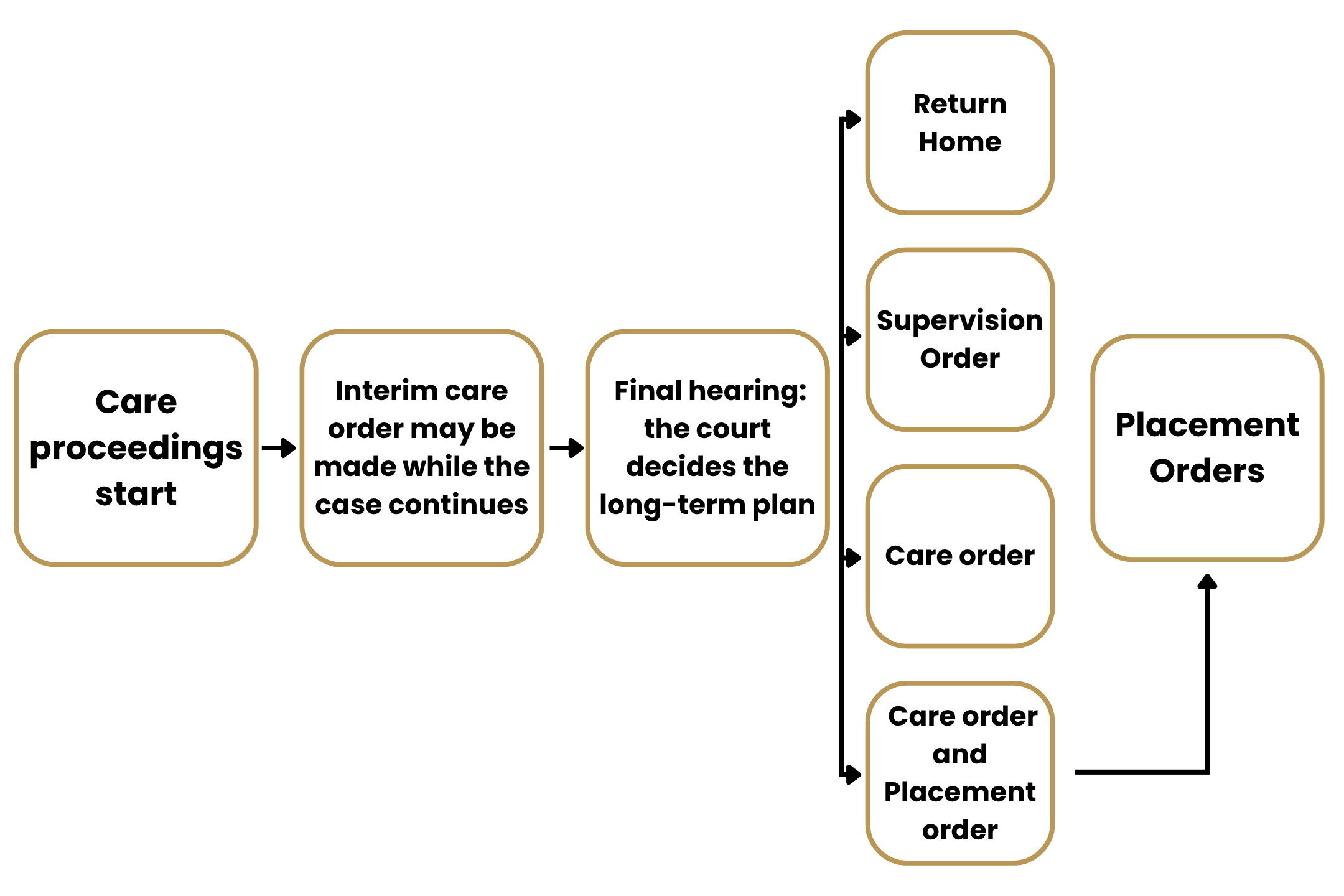
When a care order is made, the immediate effect depends on whether the order is interim or final. This distinction is important because an interim decision doesn’t determine the long‑term outcome of your case.
Interim care order: not the final decision
An interim care order is a temporary measure made while proceedings are ongoing. It allows the local authority to share parental responsibility so that immediate safeguarding arrangements can be put in place while the court continues to assess the evidence. During this stage, the court considers social work assessments, expert reports and the progress made by parents.
It’s common for parents to feel that once an interim care order has been granted the final outcome has already been decided. In reality, the interim stage is designed to create stability and allow a full evaluation of risk before any long‑term order is made. The court will only reach a final decision after considering all the evidence and determining what arrangement best promotes the child’s welfare.
Final care order: what it means and whether it can be discharged
If the court makes a final care order, the local authority will share parental responsibility with you. Your parental responsibility is not removed entirely; however, the local authority can decide how it is exercised where this is necessary to safeguard your child. This gives the local authoritythe right to take over key decisions such as where your child lives and aspects of education and healthcare.
A final care order is serious and long-term and usually last until a child is 18, but it is not automatically permanent. A parent, the child or the local authority can apply to discharge the order if there has been a significant change in circumstances. The court will then consider whether ending the order would promote the child’s welfare.
You can read more in our detailed guide on what a final care order means and how it can be discharged.
Supervision order: an alternative outcome
In some cases the court may decide that a supervision order is more appropriate than a care order. Under a supervision order the child usually remains at home, and the local authority has a duty to advise and assist the family.
Unlike a care order, a supervision order doesn’t transfer parental responsibility to the local authority. The court may choose this option where support and monitoring are sufficient to manage risk without removing day‑to‑day decision-making from the parents.
Legal aid – you do not have to face this without a solicitor
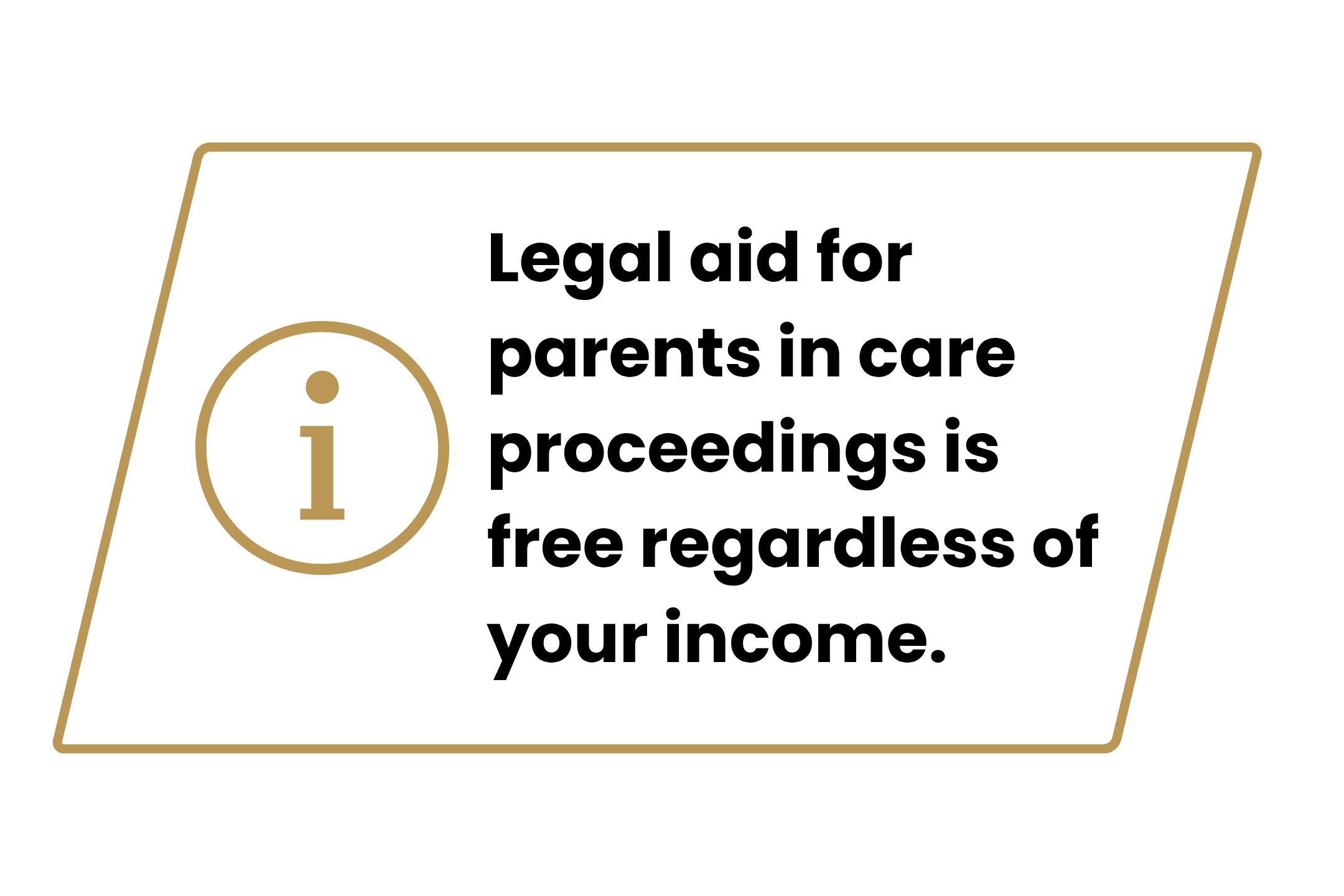
Parents involved in care proceedings are entitled to non-means-tested legal aid. This means your eligibility does not depend on your income or savings. Financial circumstances shouldn’t prevent you from having proper legal representation when decisions are being made about your children’s future.
Care proceedings involve detailed legal tests, professional assessments and court hearings. Having a solicitor ensures that your position is clearly presented, that reports are properly examined and that you understand each stage of the process.
What you can do right now
If you are in care proceedings and asking whether you will get your child back, there are immediate steps you can take:
- Speak to a specialist care proceedings solicitor as early as possible
- Engage fully with assessments and recommended support
- Keep records of appointments, courses and progress
- Maintain contact with your child in line with court arrangements
- Be open about any challenges so they can be addressed properly
Understanding the process can help you stay calm during an extremely stressful time. You are not alone when worrying about what happens next.
If you’re involved in care proceedings or have received notice of a final hearing, you can speak to National Legal Service in confidence. Call our care proceedings solicitors to discuss your situation and the support available to you.
Information is for general guidance in England and Wales and is not a substitute for legal advice.